
AI-Guided
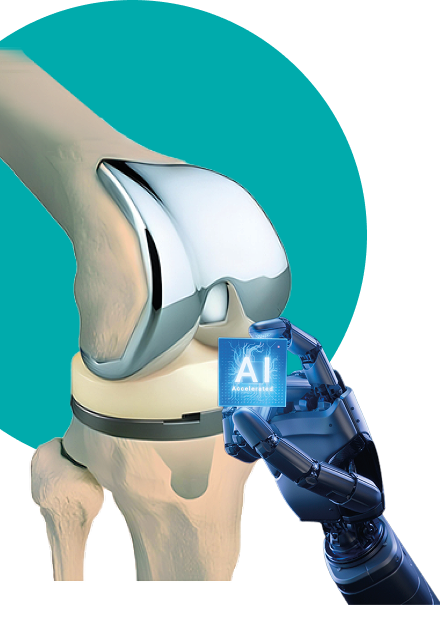
Artificial Intelligence (AI) refers to advanced computer algorithms capable of analyzing vast amounts of data and assisting in decision-making.
Role in Surgery
- AI assists surgeons in planning the surgery by analyzing patient-specific imaging like X-rays, MRIs, or CT scans.
- It provides real-time guidance during surgery, ensuring precise placement of the knee implant.
- Enhances accuracy by minimizing human error and optimizing implant alignment based on patient data.

Kinematic
Kinematics refers to motion and movement patterns.
Relevance in Knee Replacement
Kinematic knee replacement restores the patient’s natural knee movement. It aligns the prosthetic components based on the patient’s unique anatomy rather than using a standardized approach.
Techniques Used
- Personalized mapping of the knee joint's ligaments and bone structure.
- Ensuring the implant mimics the original motion of the natural knee.
Benefits
- Enhances knee functionality and range of motion.
- Reduces wear and tear on the prosthetic, increasing its lifespan.
- Provides a more natural feel and movement post-surgery.
Knee Replacement
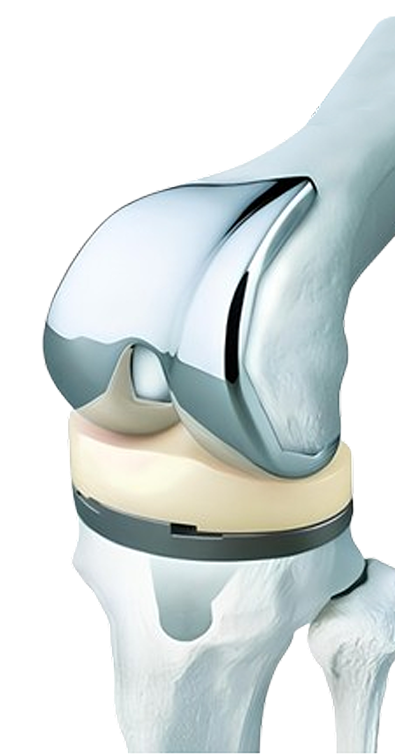
Knee replacement surgery involves replacing damaged parts of the knee joint with artificial components.
Process
- Removal of damaged cartilage and bone from the joint.
- Replacement with metal or plastic components replicating natural joint movement.
Benefits
- Relieves pain.
- Restores function.
- Improves overall quality of life.
AI-guided KKR vs TKR
- KKR uses AI and robotics for highly accurate implant alignment, while TKR relies on manual expertise and standard tools, leading to potential variations.
- KKR personalizes the procedure based on the patient’s natural knee movement, whereas TKR follows a generalized method using standard templates.
- KKR allows faster recovery due to precise alignment and minimal tissue damage, while TKR recovery may take longer due to greater tissue trauma.
- KKR offers a more natural range of motion, reducing stiffness, while TKR may feel less natural and lead to discomfort.
- KKR is more expensive due to advanced technology, whereas TKR is more affordable and widely available.
A New Era in Knee Care
Moving Beyond Traditional Replacement
Reasons why AI-guided Kinematic
Knee Replacement is preferred over TKR
Enhanced Precision
AI-guided systems provide real-time feedback during surgery, ensuring accurate knee joint alignment tailored to the patient’s natural anatomy. This leads to better functionality and longevity of the implant.
Personalized Approach
Kinematic knee replacement focuses on restoring the patient’s natural knee motion by replicating the original joint kinematics, improving post-surgery comfort and mobility compared to the one-size-fits-all approach of TKR.
Faster Recovery
With improved surgical accuracy and minimal disruption to surrounding tissues, patients experience reduced pain, shorter hospital stays, and quicker rehabilitation timelines.
Term Outcomes
AI assistance reduces the risk of implant wear and loosening, leading to greater durability and patient satisfaction, minimizing the need for revision surgeries.